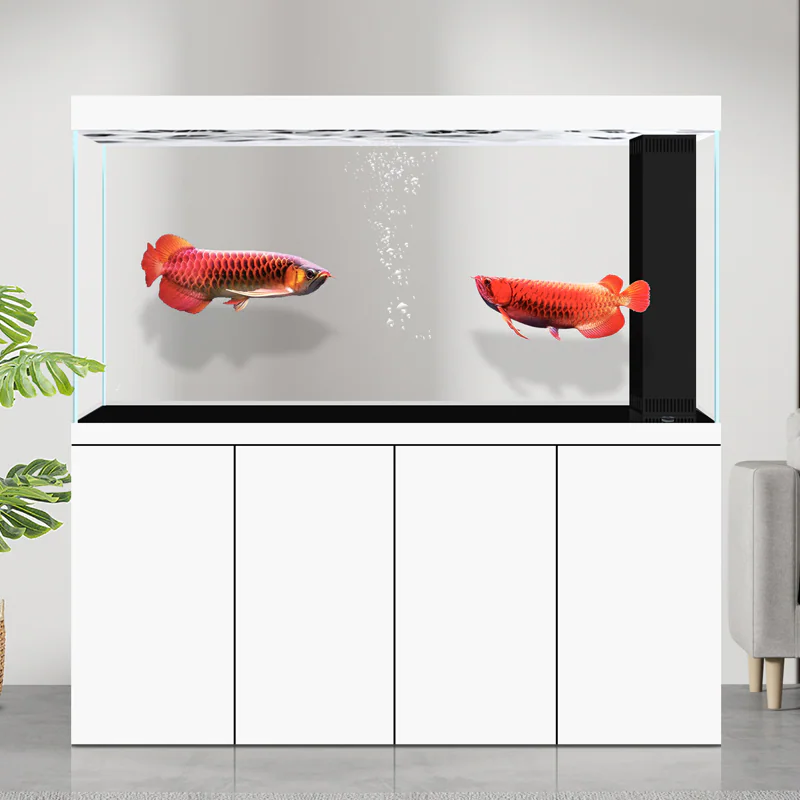
The filtration format must match available space and maintenance access. Sumps provide flexible media and equipment zones, rear or side chambers keep compact systems self-contained, canisters suit selected smaller installations, and remote plant rooms support larger commercial projects.
Bottom sump filtration
Rear or side chamber filtration
Canister or dry-wet filtration
Remote plant-room filtration
02
Turnover is a design range, not a pump label
Early planning commonly starts around 3-5 turnovers per hour for planted displays, 4-6 for general freshwater systems, 6-8 for higher-load freshwater systems, and 6-10 through filtration for many marine systems. Pipe losses, lift height, equipment resistance, livestock, and separate in-tank circulation must be checked before selecting the pump.
Calculate from net operating water volume
Correct for head height and pipe losses
Separate filtration turnover from display circulation
Provide isolation and service access
03
Pipework and controls
Pipe diameter follows verified flow, velocity, run length, lift, and fitting losses. Controls can range from labeled manual switching to water-level monitoring, temperature management, automatic top-off, leak alerts, and building-management interfaces.
UPVC or project-approved pressure pipe
Union valves at service points
Normal and emergency water-level paths
Control functions matched to maintenance capacity
Buyer questions
Frequently asked questions
How many times per hour should aquarium water circulate?
The correct rate depends on livestock, waste load, filtration type, hydraulic loss, and whether display circulation is separate. Planning ranges are useful, but the final pump duty must be calculated for the installed system.
Is a sump always better than a canister filter?
No. A sump offers more equipment space and service flexibility, while a canister may suit a smaller or simpler installation. The available cabinet space, noise target, maintenance routine, and failure controls decide the better option.
Can ANMERTON supply the pipework and control system?
Yes. Pipework, valves, overflow, return lines, control functions, monitoring, and optional automatic top-off can be included in the approved aquarium-system scope.